Call Us
+91 6289171948
Mail Us
admin@paramparik.org
Address
1730 Sammilani Park Road, Chak Garia, Survey Park, Kolkata, West Bengal 700075

[There are] three concepts of culture: the first as the cultivation of mind, the second as a body of aesthetic and intellectual works or practices, and the third as a way of life of social groups.

—Jeong Ae Park (ed.), Art Education as Critical Cultural Inquiry

As they say, art regenerates itself in its own secret garden, not in the bazaar. At Paramparik, we believe that an art music event itself can become an object of art that heals, and nourishes the soul. And a volunteer-driven effort can also look professional in executional efficiency and perfection.

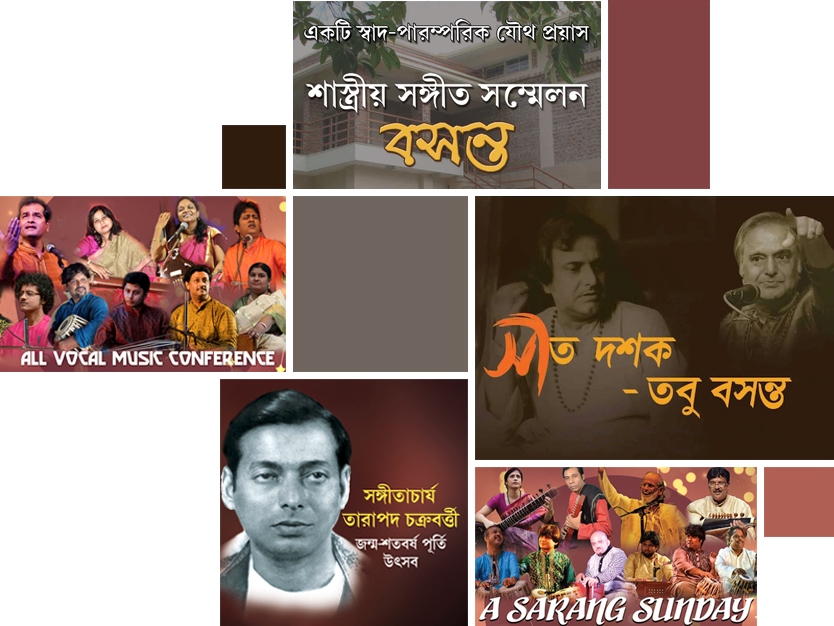
In the two post-Internet decades much of Indian Classical has taken, to recall Guy Debord’s Society of The Spectacle, a form that has rarely displayed depth, raagdari, or above all, the abstract thing called mijaz. In the current milieu of well-decked slop and circus, Paramparik has held Indian Classical festivals still talked about in the connoisseur circles in Kolkata.

Our motto is quality over quantity. Depth over entertainment. Art Music that has soul, composure, and intellectual rigor over the out-of-tune braggadocio that often passes for it.

To Name Names

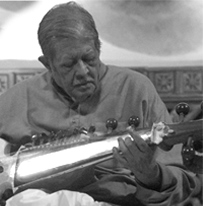
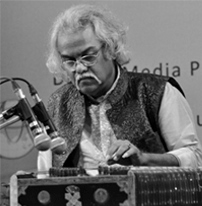
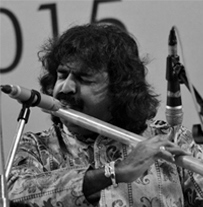
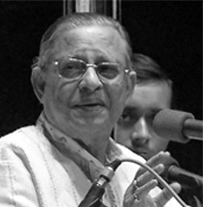
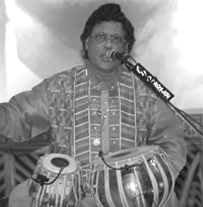
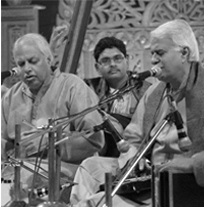
Paramparik's festival lineup has included some of the biggest names in Indian Classical: Birju Maharaj, Shiv Kumar Sharma, Hariprasad Chaurasia, Buddhadeb Dasgupta, Budhaditya Mukherjee, Sultan Khan, Rajan and Sajan Mishra, Vishwa Mohan Bhatt, Shahid Parvez, Rashid Khan, Tejendra Narayan Majumdar, Kushal Das, Biswajit Roy Chowdhury, Venkatesh Kumar, Amiya Ranjan Bandyopadhyay, Manas Chakraborty, Chitresh Das, Jagdish Prasad, Bhajan Sopori,Shashank Subramanyam, Jayanthi Kumaresh, U. Rajesh, Debashish Bhattacharya, Vinayak Torvi, Pravin Godkhindi, and many more. Some of the memorable Tabla solos came from Swapan Chowdhury, Kumar Bose, Sanjay Mukherjee, Anindo Chatterjee and Nayan Ghosh.
Special Events

Tagore–the one-man cultural institution who sculpted the Bengali ethos–thrived in intercultural, interdisciplinary, and international spaces. His humanism and universalism rose above the narrow confines of rote tradition, religion, nationalism, and sectarianism. He knew that whether creative or performative, art is a maverick animal–always looking for transformative, often disruptive innovation.

This is why we have built collaborations with art centers, art and history museums, film and classical music institutions, indie theater groups, and [Dis]Ability rehab centers of India.

We love it when a young rural life, with our help, finds its footing in the hallowed corridors of Max Planck Institute. When new truths emerge in the intersectional space of art, music, literature, theater, film and mixed media studies. Both are social innovations in which Paramparik likes to contribute, and create even newer synergies.